Speakers
See our speakers for the 2026 Southeast Quantum Workshop.
Friday, Oct. 9
Greg Byrd
NC State Quantum Initiative
Bio
Coming Soon.
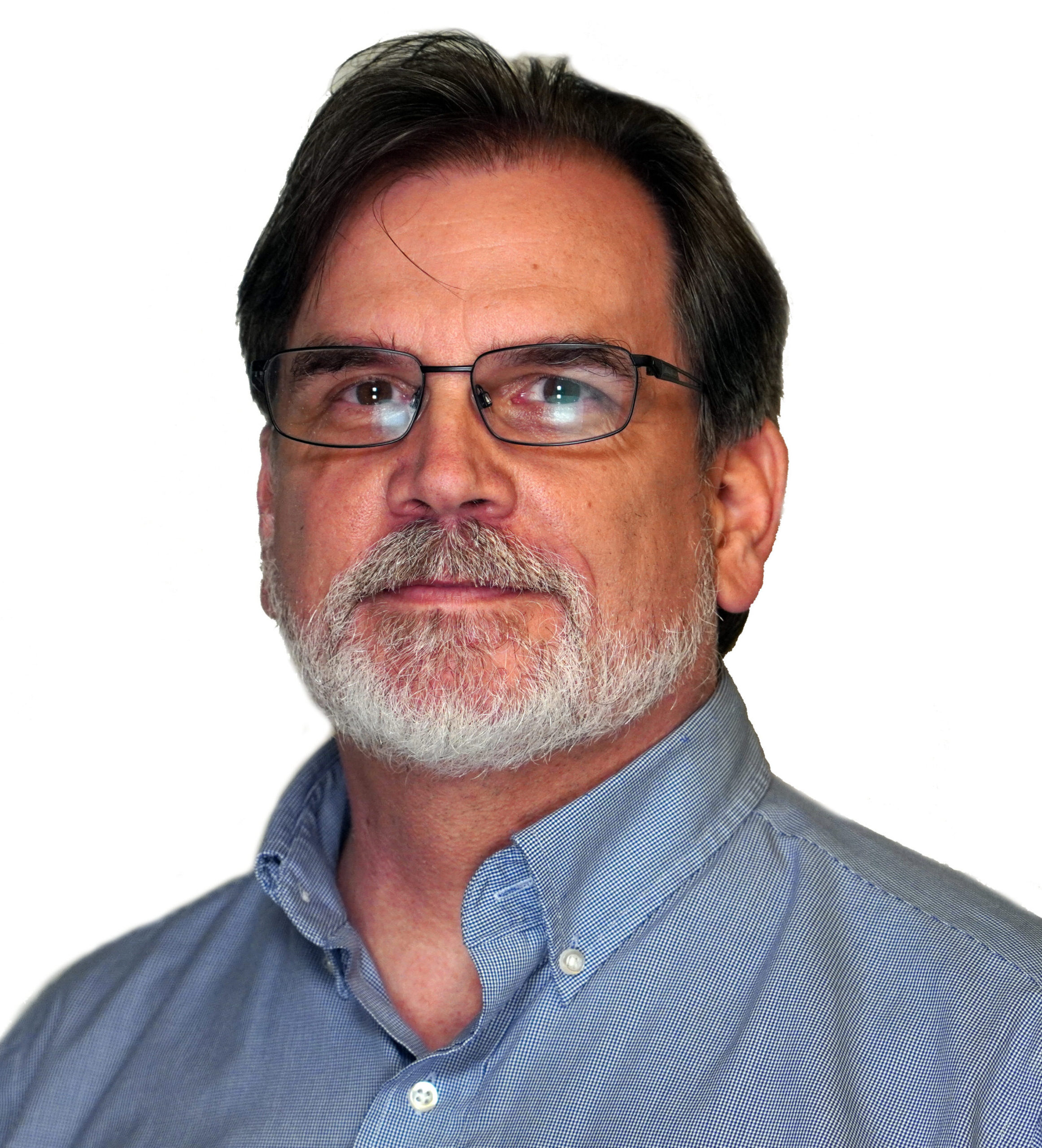
Talk Title: Introduction to Quantum Computing
This tutorial will introduce the fundamental concepts of quantum computing, primarily from a programming and algorithms perspective. Topics include quantum bits (qubits), superposition, entanglement, quantum gates and circuits, and some important quantum algorithms. Knowledge of quantum mechanics is not required, but familiarity with basic linear algebra (vectors and matrices) is helpful. Emphasis will be placed on topics that will be further explored during the rest of the workshop.
Saturday, Oct. 10
Ted Yoder
IBM Quantum
Bio
Ted obtained his Ph.D. from MIT in 2018 and has been a quantum research scientist at IBM since then. He’d really like to see a useful quantum computer become a reality. In an effort to make that happen, his current interests involve quantum error correction and fault-tolerance using qLDPC codes.
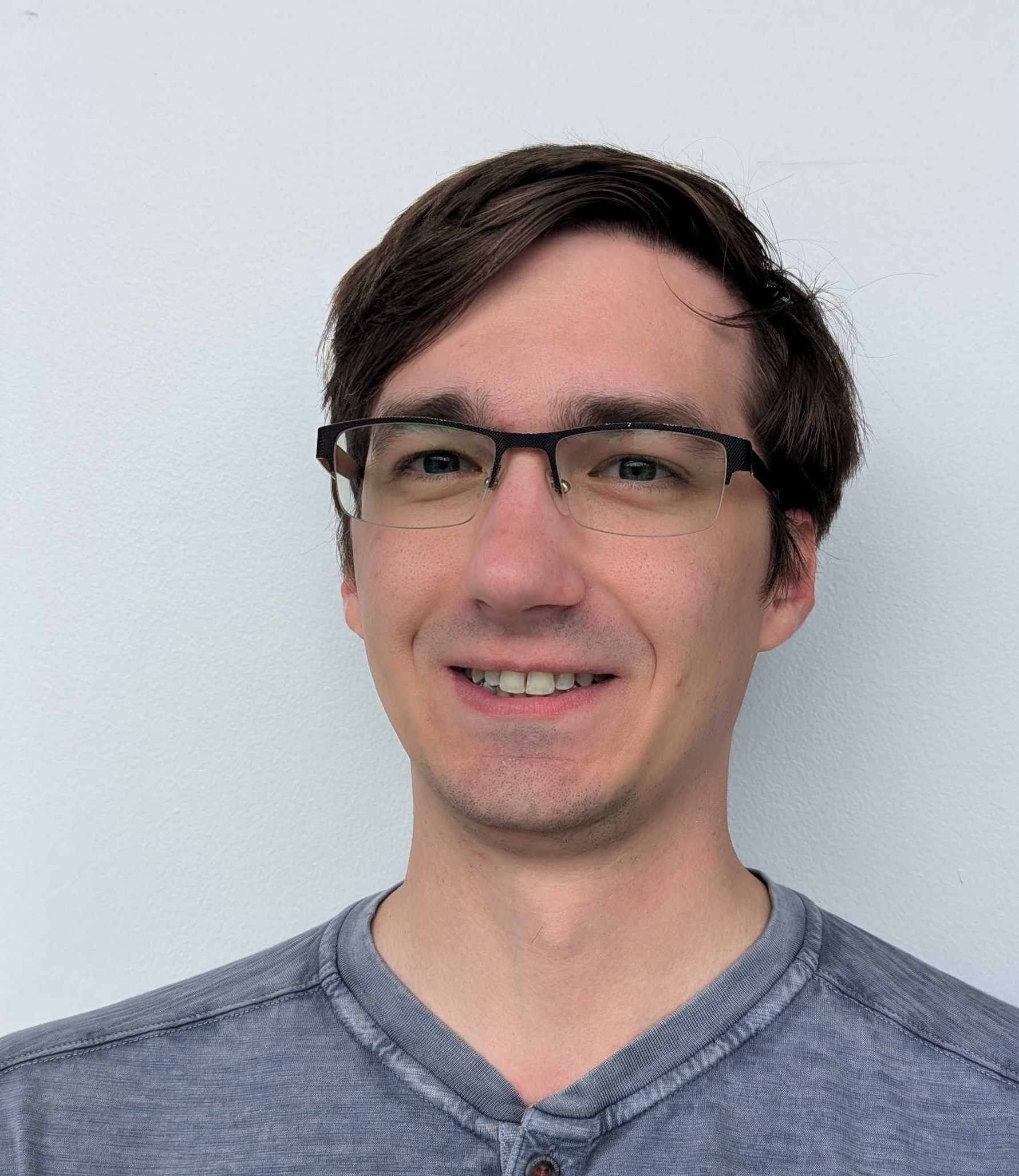
Talk Title: Fail fast: techniques to probe rare events in quantum error correction
The ultimate goal of quantum error correction is to create logical qubits with very low error rates (e.g., 1e-12) and assemble them into large-scale quantum computers capable of performing many (e.g., billions) of logical gates on many (e.g., thousands) of logical qubits. However, it is necessarily difficult to directly assess the performance of such high-quality logical qubits using standard Monte Carlo sampling because logical failure events become very rare. Building on existing approaches to this problem, we develop three complementary techniques to characterize the rare-event regime for general quantum low-density parity-check (qLDPC) codes under circuit noise. (I) We propose a well-motivated, low-parameter ansatz for the failure spectrum (the fraction of fault sets of each size that fail) that empirically fits all the QEC systems we studied and predicts logical error rates at all physical error rates. (II) We find min-weight logical operators of syndrome measurement circuits and exactly compute the number of min-weight failing configurations. (III) We generalize the splitting method to qLDPC codes using multi-seeded Metropolis sampling to improve convergence for systems with many inequivalent logical operators. We apply these tools to distance-6, -12, and -18 bivariate bicycle codes under circuit noise, observing strong low-error-rate performance with the recently proposed Relay decoder but also considerable scope for further improvement.
Evangelia Takou
Duke University
Bio
Evangelia received her Ph.D. in Physics from Virginia Tech, where she worked with Prof. Sophia Economou and Prof. Ed Barnes on gate design, quantum networks, and analysis of multipartite entanglement. In 2024, she joined Prof. Ken Brown’s lab at Duke University as a Postdoctoral Associate, and since then she has been researching quantum error correction.
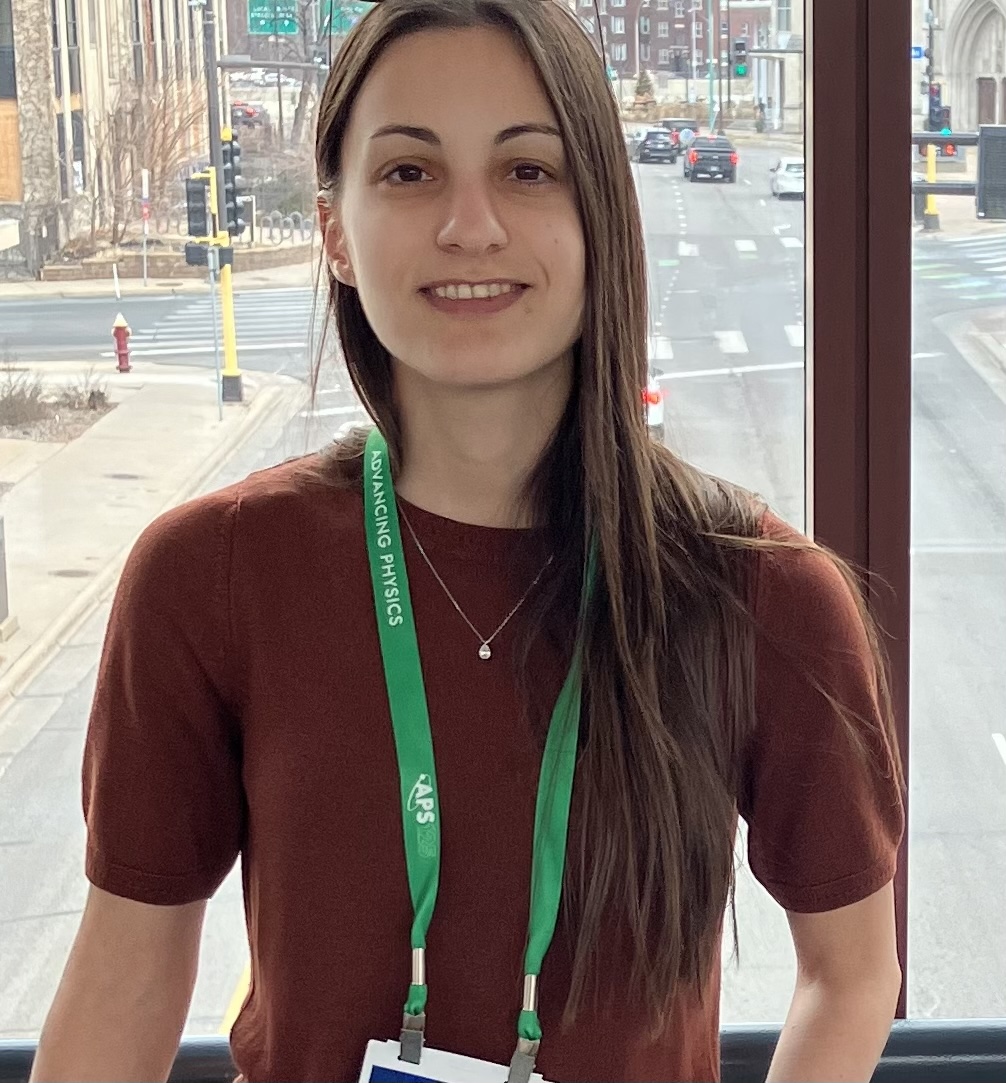
Talk Title: Suppressing logical errors with syndrome-determined detector error models
Precise knowledge of the noise of quantum devices enables the design of less resource-intensive quantum error correcting (QEC) codes and boosts the logical error suppression via noise-aware decoding. Typical characterization methods such as tomography are limited to small systems due to the prohibitive computational and experimental overhead. In this talk, I will describe an efficient top-down approach for noise estimation, which uses only the syndrome history of QEC experiments. This method can learn stochastic and coherent noise, as well as capture noise drifts. I will show how one can build accurate noise models to benefit decoders through simulations of memory QEC experiments. Lastly, I will talk about benchmarks of the developed method on Google’s and IBM’s devices.
Hunter Nelson
Virginia Tech Center for Quantum Information
Science and Engineering
Bio
Hunter Nelson is a Ph.D. candidate in physics at Virginia Tech, working in quantum information science with Edwin Barnes and Sophia Economou. His research focuses on quantum error correction and quantum control, emphasizing the use of algebraic and geometric structure to simplify the design of quantum operations. His recent work develops a syndrome-partition framework for constructing deterministic logical gates directly from the stabilizer structure of quantum error-correcting codes, including Clifford
and non-Clifford operations in qLDPC codes. More broadly, he is interested in practical methods for logical gate design, robust quantum control, and the structure underlying fault-tolerant quantum computation.
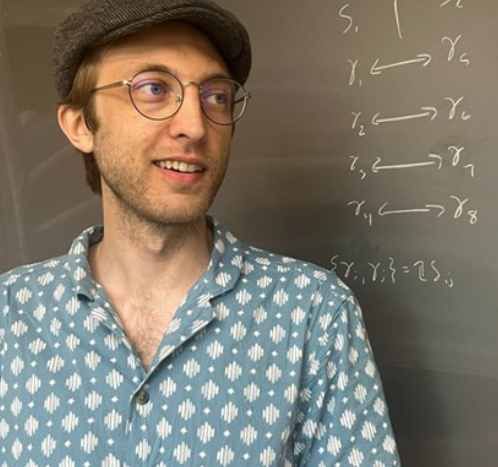
Talk Title: From Syndromes to Computation: A General Framework for Native Logical Operations in Quantum Error-Correcting Codes
Fault-tolerant quantum computation requires error-correcting codes that not only protect quantum information but also support useful logical operations with practical physical realizations. Existing gate-design methods often rely on transversality, CSS structure, code automorphisms, or additional geometric and homological structure, and systematic constructions become substantially more difficult beyond the Clifford group. Here we develop a general framework in which the stabilizer syndromes of commuting Pauli rotations directly organize logical-gate design. We derive an exact codespace-preservation condition valid at arbitrary rotation angles, providing a common stabilizer- level description for CSS and non-CSS codes and for both Clifford and non-Clifford operations. A particularly useful equal-syndrome specialization reduces Clifford gate design to stabilizer factorization, yields a general fragment-weight bound of $\lceild/2\rceil$ for distance-$d$ codes, and systematically extends to logical rotations higher in the Clifford hierarchy. Applied to bivariate-bicycle and non-CSS Mirror qLDPC codes, the framework uncovers large families of Clifford gates together with native controlled-phase and $\pi/8$ $T$-type operations. We also develop analytic constructions using Clifford algebra bases, which turn the syndrome constraints into explicit algebraic relations and produce addressed CNOT, SWAP, controlled, and CCZ-type gates on recursive hypercube codes. An independent construction on middle quantum Reed–Muller codes yields disjoint $C^rZ$ layers that saturate the equal-syndrome weight bound. These results establish stabilizer syndromes as a constructive link between the stabilizer structure of a quantum code and the logical computations it can natively
support.
Hrushikesh Pramod Patil
NC State University
Bio
Hrushikesh Pramod Patil is a Postdoctoral Research Scholar at NC State, where he works in Dr. Sabre Kais’ quantum information science group. He received his Ph.D. from NC State under the supervision of Dr. Huiyang Zhou. His research focuses on fault-tolerant quantum computing, especially simulating and benchmarking quantum error correction and magic-state preparation protocols. It also extends to quantum error mitigation, quantum machine learning, and non-equilibrium quantum dynamics.
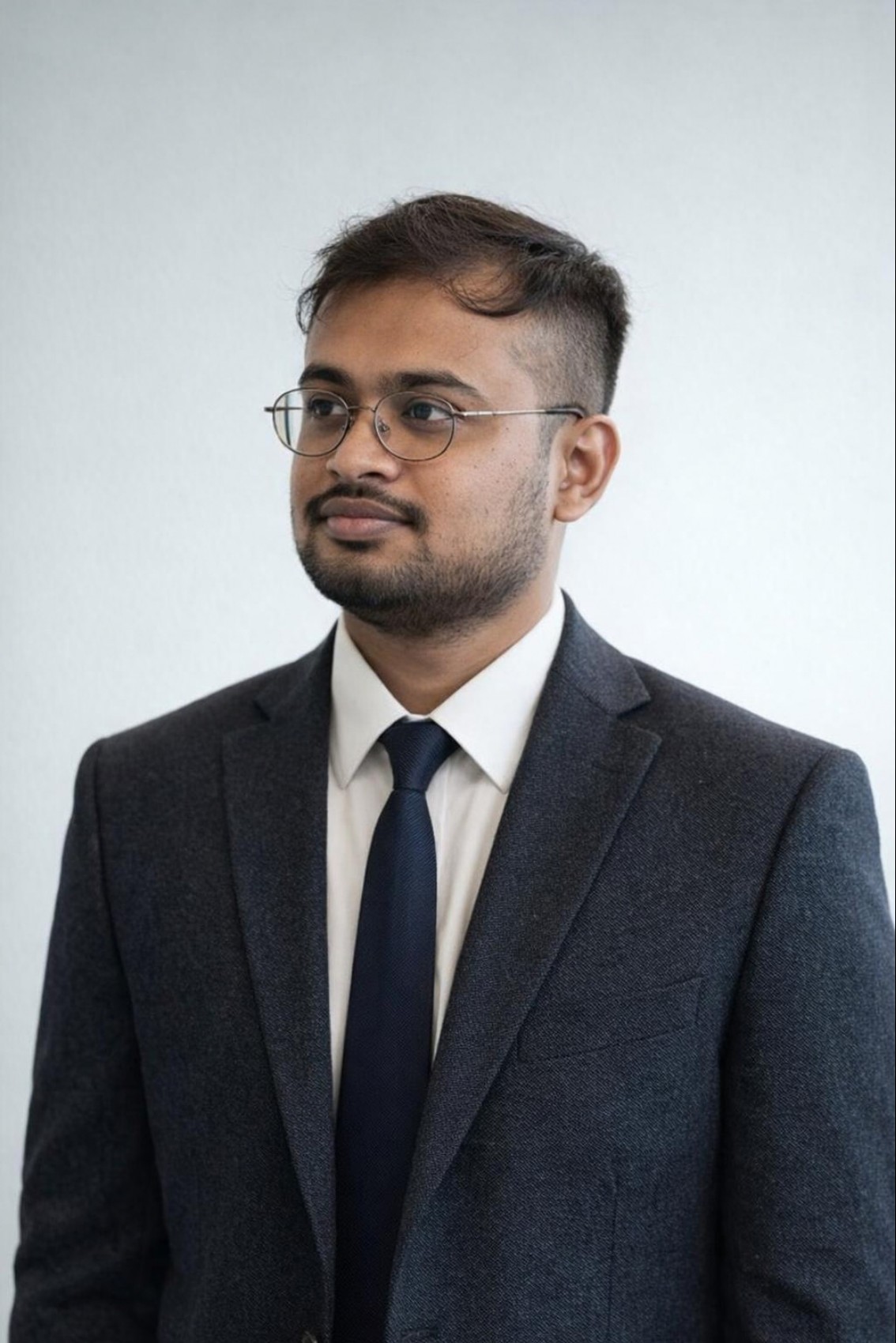
Talk Title: Magic state factories via transversal non-clifford gates
Preparing high-fidelity magic states is a major resource bottleneck in fault-tolerant quantum computing. Magic-state cultivation (MSC) has recently emerged as a low-overhead alternative to distillation, producing T states at roughly the cost of a lattice-surgery CNOT. It has since been extended to surface-code variants, paired with lattice-surgery escape, and demonstrated experimentally on a superconducting processor. Yet most MSC studies rely on Clifford-simulable S-state proxies, and we find that the gap between T- and S-state infidelity widens as physical noise decreases. In this talk, I will present an alternative route that uses code switching with a transversal T gate on the doubled color code. We perform end-to-end simulations under circuit-level noise that includes idling, introduce a lattice-surgery protocol that escapes directly from the doubled color code to a rotated surface code, and extend the protocol to distance 5. Finally, I will discuss hybrid protocols that combine MSC-style phase-kickback checks with transversal non-Clifford gates, and I will explain where each approach is best suited, particularly on all-to-all-connected platforms such as trapped ions and neutral atoms.
Sunday, Oct. 11
Eugene Dumitrescu
Oak Ridge National Laboratory
Bio
Eugene is a Senior Research scientist at ORNL where his research lies at the intersection of quantum physics and information theory. He is interested in understanding quantum many-body systems, their potential technological applications, as well as their real-world complexity. This includes, for example, topologically ordered condensed-matter systems and entangled quantum matter with applications to computation and ultra-precise metrology. To quantitatively understand these varied and complex phenomena, he employs a combination of analytic methods and multilinear algebraic computational methods.
Talk Title: Dealing with Open Quantum Systems: New Topological Codes and Dissipative Simulations at Scale.
In addition to complex quantum phenomena described by Schrodinger’s wave equation, modern quantum systems inevitably couple and interact with both classical and quantum environments. This leads to rich, novel quantum physics. This talk will describe a new, infinite family of quantum error correcting codes and multilinear methods to simulate open quantum systems at scale. Our error correction portion will focus on the benefits of confined anyons, with respect to decoder complexity, in error correcting codes. The open systems simulator will focus on applications to predicting future quantum device’s algorithmic performance and dissipative steady states.
Mohsen Ghodrati
NC State University
Bio
Mohsen Ghodrati is a Ph.D. student in Electrical Engineering at NC State, advised by Prof. Dror Baron. His research focuses on quantum information processing, quantum error mitigation, and statistical methods for extracting reliable information from finite quantum measurements. His recent work develops sample-level error-mitigation methods for recovering useful bitstrings from noisy quantum executions.
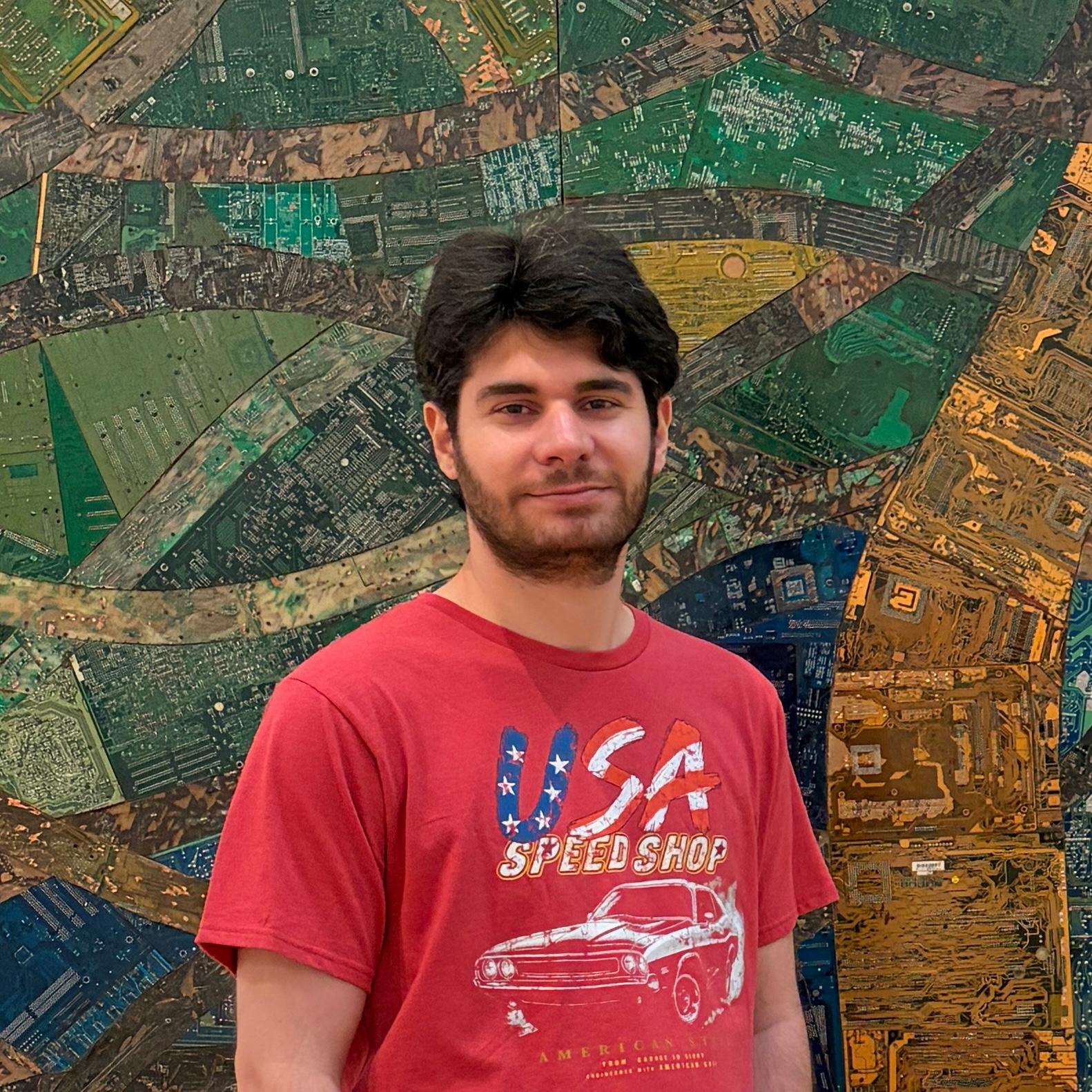
Talk Title: Reliable Sample-Level Quantum Error Mitigation via Dominance-Aware Clustering
Many quantum algorithms ultimately require useful bitstrings–not only accurate expectation values–from a finite set of noisy measurements. This talk presents dominance-aware (DA) clustering, a sample-level quantum error mitigation framework for discovering and refining high-probability solution regions directly from measured bitstrings. We discuss its finite-sample recovery guarantees, practical variants, and experiments on noisy QAOA instances.