Speakers
See our speakers for the 2026 Southeast Quantum Workshop.
Friday, Oct. 9
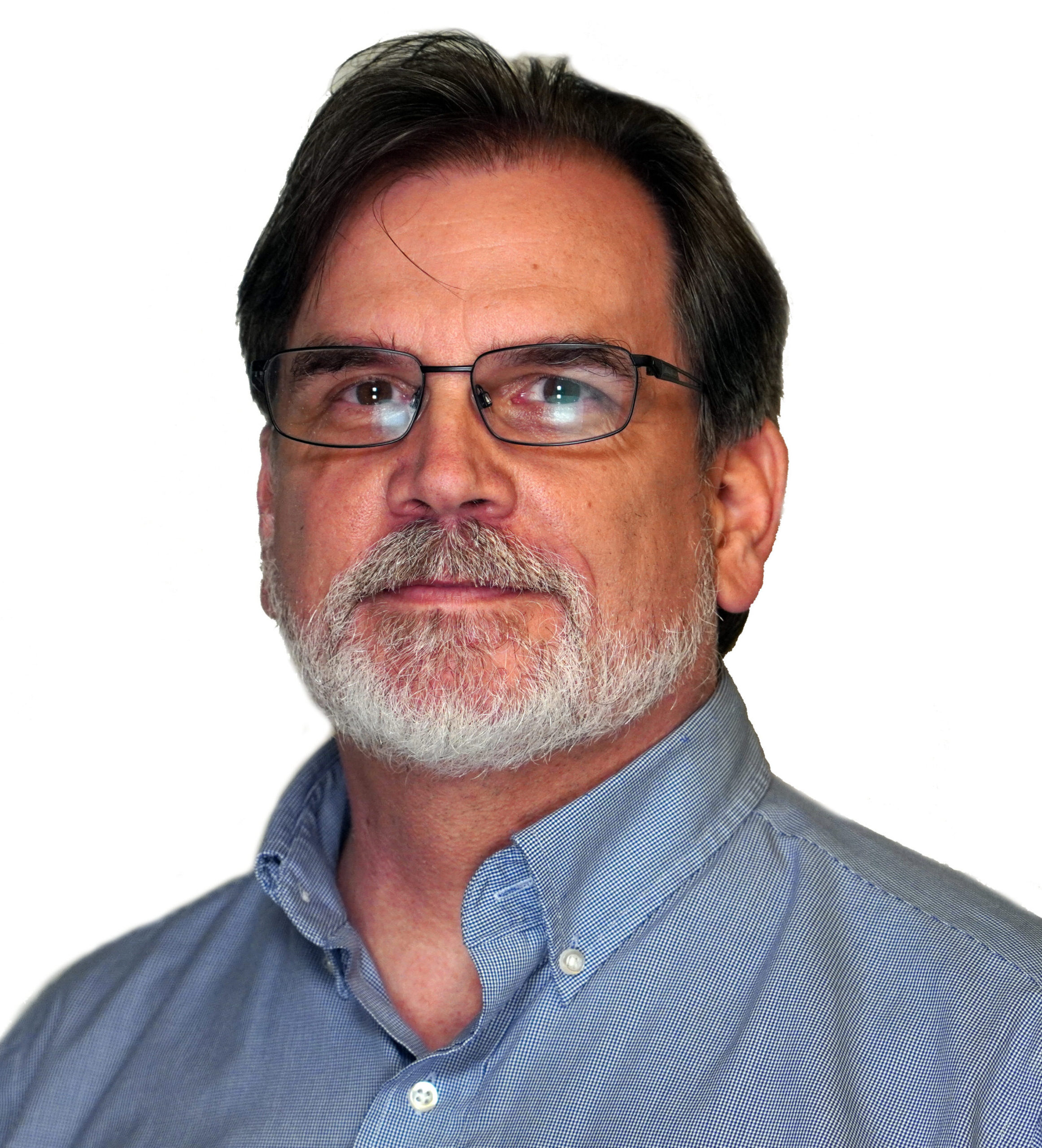
Greg Byrd
NC State Quantum Initiative
Bio
Dr. Greg Byrd is a Professor of electrical and computer engineering and the Director of the NC State Quantum Initiative.
He teaches quantum programming, and his research interests include applying quantum algorithms to optimization and machine learning. Dr. Byrd is the Chair of the IEEE Quantum Technical Community.
Talk Title: Introduction to Quantum Computing
This tutorial will introduce the fundamental concepts of quantum computing, primarily from a programming and algorithms perspective. Topics include quantum bits (qubits), superposition, entanglement, quantum gates and circuits, and some important quantum algorithms. Knowledge of quantum mechanics is not required, but familiarity with basic linear algebra (vectors and matrices) is helpful. Emphasis will be placed on topics that will be further explored during the rest of the workshop.
Saturday, Oct. 10
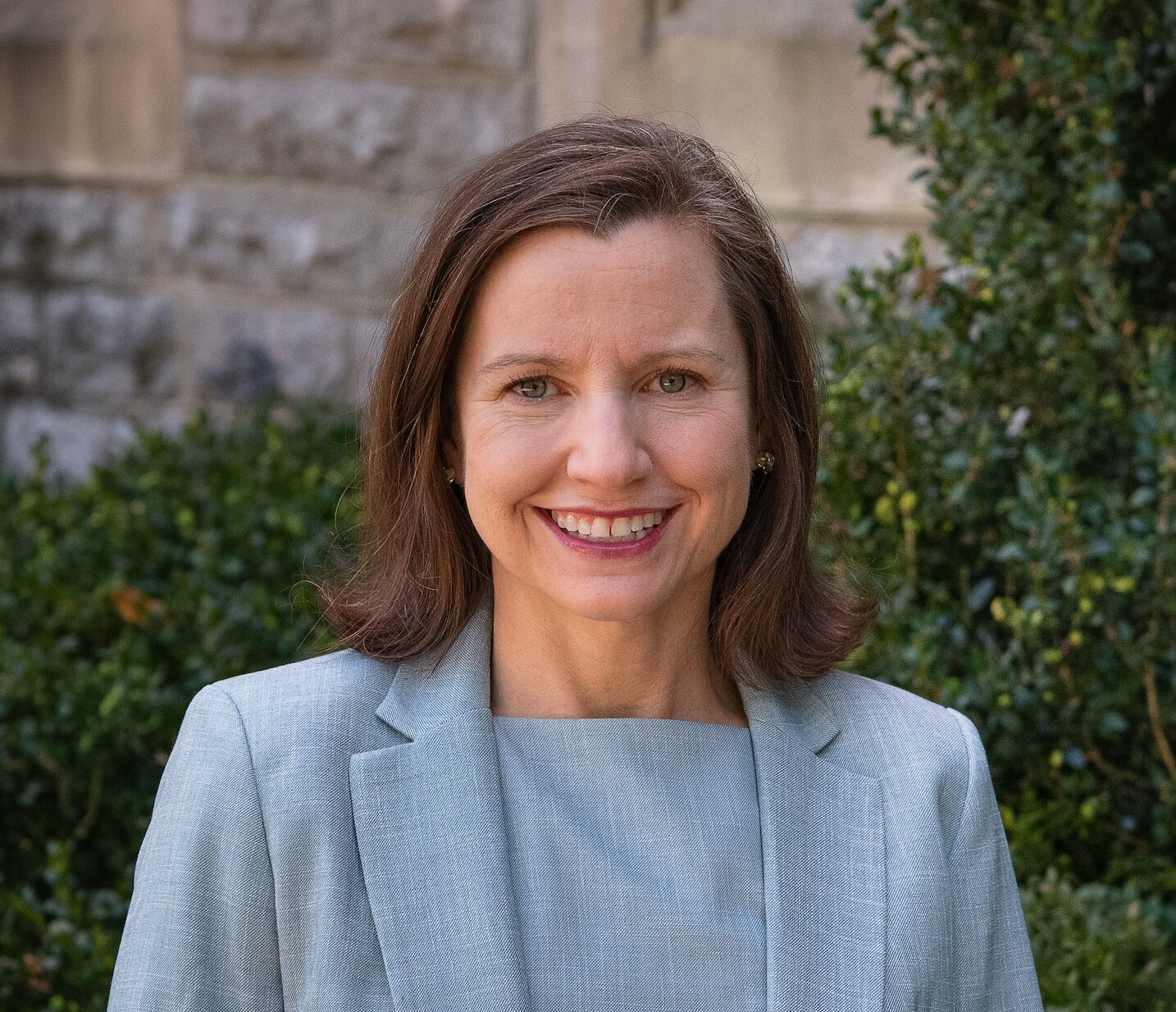
Gretchen L. Matthews
Virginia Tech
Bio
Gretchen L. Matthews is a Professor in the Department of Mathematics and, by courtesy, the Bradley Department of Electrical & Computer Engineering at Virginia Tech, where she also serves as Director of a regional component of the Commonwealth Cyber Initiative (CCI), a statewide cybersecurity research, innovation, and workforce development effort. Matthews leads the Applied Algebra Research Group at Virginia Tech, focusing on coding theory and related topics, focusing on algebraic methods for secure and reliable communication and data storage. Matthews earned a B.S. in Mathematics from Oklahoma State University, a Ph.D. in Mathematics from Louisiana State University, and an M.B.A. from Virginia Tech.
Talk Title: Introduction to Quantum Error Correction
Quantum error correction is a foundational technology for large-scale quantum computing and quantum communication, providing methods to protect fragile quantum information from noise, decoherence, and imperfect operations. This tutorial presents a concise introduction to the fundamental ideas underlying quantum error correction. We will survey several important code families and discuss how concepts from classical coding theory, algebra, and information theory have shaped current approaches to protecting quantum information.
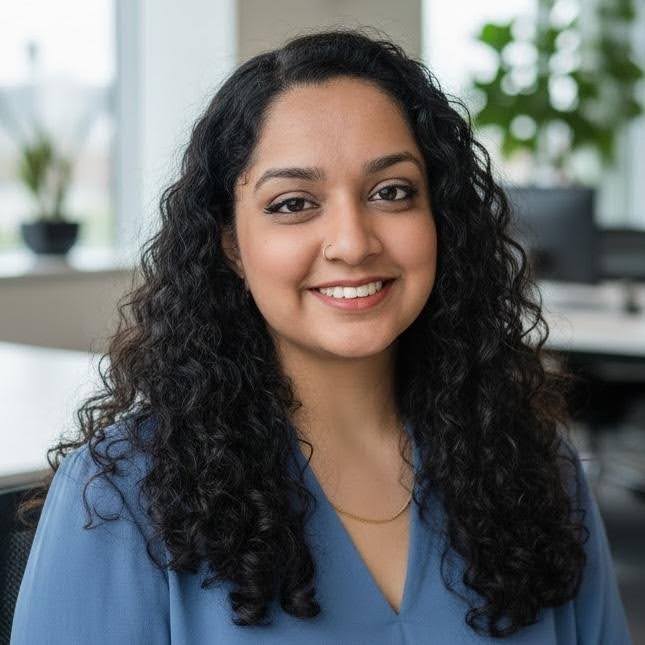
Ria Patel and Thomas Gilbert
NC State Quantum Computing Club
Bio
Ria Patel, President of the Quantum Computing Club, is a second-year Computer Science Ph.D. student. Her research focuses on quantum computing architecture, pulse-level compilation, and hardware-aware optimization. She designs quantum software frameworks tailored for quantum-classical HPC workflows, and recently collaborated with Centre Inria de l’Université de Rennes in France on distributed quantum-HPC workflows.
Bio
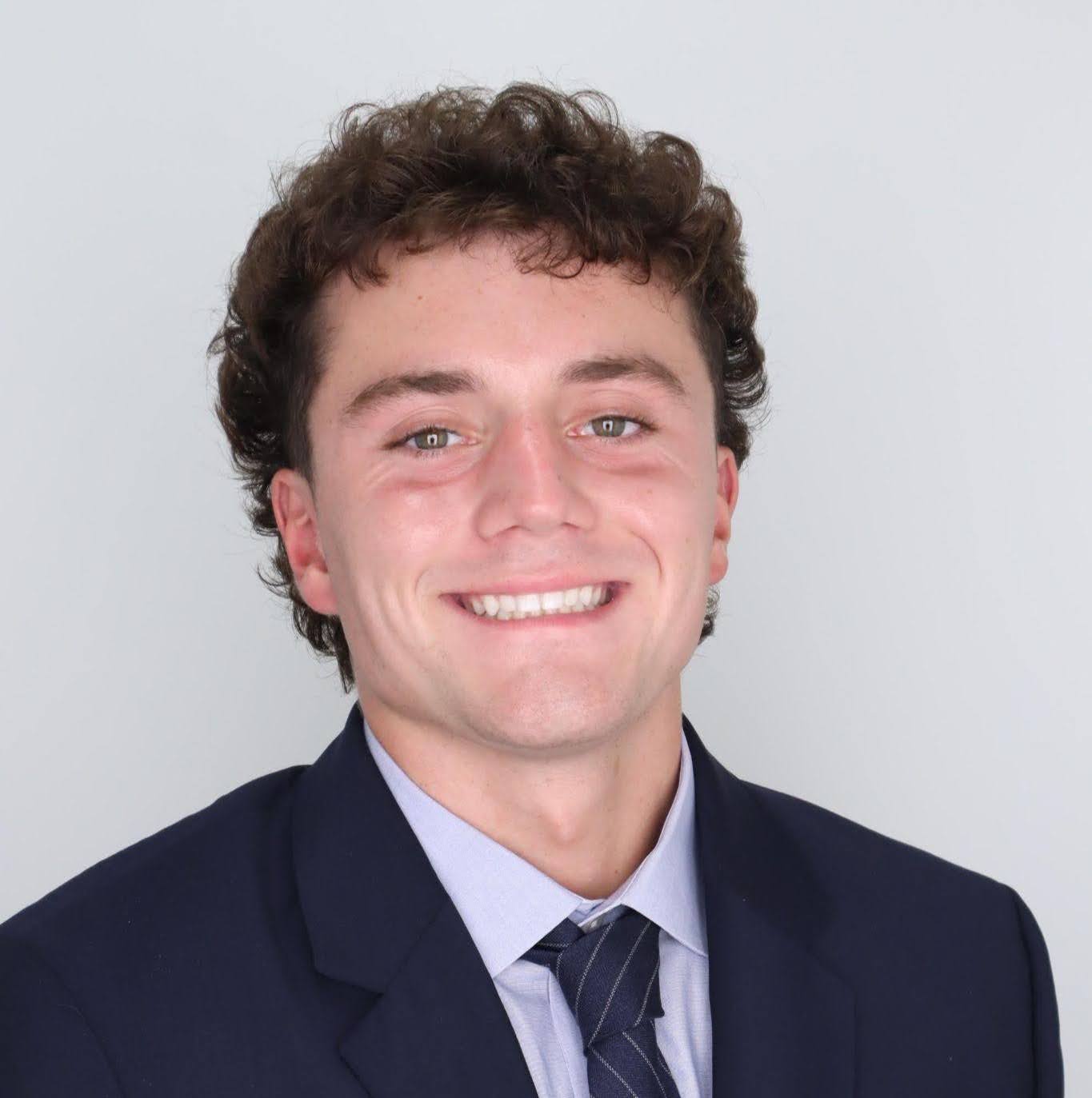
Thomas Gilbert, Vice President of the Quantum Computing Club, is a Computer Engineering senior in NC State’s accelerated bachelor’s/master’s program. He researches quantum hardware in Dr. Weijian Chen’s lab, including RFSoC-based qubit control and exceptional-point sensors. He is the lead organizer of the IEEE Computer Society-funded Quantum Control Hackathon, which he secured funding for, putting real quantum control hardware in students’ hands.
Julia Shapiro
Virginia Tech
Bio
Julia Shapiro is a Ph.D. student in the Department of Mathematics at Virginia Tech, advised by Professor Gretchen Matthews. Her research focuses on coding theory, particularly algebraic geometry codes and quantum error correction. She is a Department of Defense Cyber Service Academy Scholar and a co-organizer of the Postgraduate International Coding Theory Seminar. She received her B.S. in Mathematics from the University at Buffalo in 2022 and her M.S. in Mathematics from Virginia Tech in 2024.
Talk Title: Quantum Error Correction with Folded Algebraic Geometry Codes
Folded Reed-Solomon codes, introduced by Guruswami and Rudra in 2007, have been shown to achieve the information-theoretically optimal trade-off between code rate and error-correction radius. In 2022, Bergamaschi, Golowich, and Gunn initiated the study of folded codes in the quantum setting by constructing folded quantum Reed–Solomon codes and demonstrating that these codes satisfy the quantum Singleton bound. This talk focuses on the construction of quantum error-correcting codes (QECCs) using tools from algebraic geometry. In particular, we examine the role of the genus of the underlying curve and the need for distance amplification. Folded algebraic geometry codes constructed from curves of positive genus can have smaller alphabet sizes than folded Reed–Solomon codes, potentially allowing for more efficient encoding and decoding. Constructing quantum codes from folded algebraic geometry codes therefore broadens the range of available constructions for QECCs.
Ted Yoder
IBM Quantum
Bio
Ted obtained his Ph.D. from MIT in 2018 and has been a quantum research scientist at IBM since then. He’d really like to see a useful quantum computer become a reality. In an effort to make that happen, his current interests involve quantum error correction and fault tolerance using qLDPC codes.
Talk Title: Fail fast: techniques to probe rare events in quantum error correction
The ultimate goal of quantum error correction is to create logical qubits with very low error rates (e.g., 1e-12) and assemble them into large-scale quantum computers capable of performing many (e.g., billions) of logical gates on many (e.g., thousands) of logical qubits. However, it is necessarily difficult to directly assess the performance of such high-quality logical qubits using standard Monte Carlo sampling because logical failure events become very rare. Building on existing approaches to this problem, we develop three complementary techniques to characterize the rare-event regime for general quantum low-density parity-check (qLDPC) codes under circuit noise. (I) We propose a well-motivated, low-parameter ansatz for the failure spectrum (the fraction of fault sets of each size that fail) that empirically fits all the QEC systems we studied and predicts logical error rates at all physical error rates. (II) We find min-weight logical operators of syndrome measurement circuits and exactly compute the number of min-weight failing configurations. (III) We generalize the splitting method to qLDPC codes using multi-seeded Metropolis sampling to improve convergence for systems with many inequivalent logical operators. We apply these tools to distance-6, -12, and -18 bivariate bicycle codes under circuit noise, observing strong low-error-rate performance with the recently proposed Relay decoder but also considerable scope for further improvement.
Giuseppe Cotardo
Virginia Tech
Bio
Giuseppe Cotardo has been an Assistant Professor in the Department of Mathematics at Virginia Tech since 2024. His research lies in algebraic coding theory and quantum error correction, with a focus on the algebraic, geometric, and combinatorial structures of error-correcting codes and their connections to network communication and algebraic complexity theory. He is a member of the Applied Algebra Research Group and the Virginia Tech Center for Quantum Information Science and Engineering.
Giuseppe obtained his B.Sc. in Mathematics from the University of Turin (2015), his M.Sc. in Mathematics from the University of Trento (2018), and his Ph.D. in Mathematics from University College Dublin (2022), where he was supported by a Government of Ireland Postgraduate Scholarship from the Irish Research Council. He subsequently held a postdoctoral position at Virginia Tech.
Talk Title: Quantum Anticodes
Large-scale quantum architectures rely on error-correcting codes that encode many logical qubits, often assembled from smaller code blocks. In such codes, different logical qubits may have different local distances, and the features that govern fault tolerance (where logical information is supported, which regions are cleanable, which logical qubits remain accessible) are not captured by the standard global parameters of quantum coding theory.
In this talk, we introduce a symplectic framework for quantum error-correcting codes, with anticodes as investigative tools for the local structure of a code. Codes are modeled as symplectic spaces, and anticodes arise as maximal subspaces supported on prescribed sets of components. The framework covers several families of quantum codes, including stabilizer and subsystem codes. It extends the notion of generalized distance and produces new invariants that capture local algebraic and combinatorial features. It also gives algebraic interpretations of the cleaning lemma, complementary recovery, and quantum weight enumerators. The new results in this talk are joint work with C. Cao and B. Lackey.
Henry Pfister
Duke University
Bio
Henry D. Pfister received his Ph.D. in Electrical Engineering in 2003 from the University of California, San Diego and is currently the Addy Family Professor of Electrical and Computer Engineering at Duke University with a secondary appointment in Mathematics. Prior to that, he was an associate professor at Texas A&M University (2006-2014), a post-doctoral fellow at the École Polytechnique Fédérale de Lausanne (2005-2006), and a senior engineer at Qualcomm Corporate R&D in San Diego (2003-2004). His current research interests include information theory, error-correcting codes, quantum computing, and machine learning.
He received the NSF Career Award in 2008 and a Texas A&M ECE Department Outstanding Professor Award in 2010. He is a coauthor of the 2007 IEEE COMSOC best paper in Signal Processing and Coding for Data Storage, a coauthor of a 2016 Symposium on the Theory of Computing (STOC) best paper, a co-recipient of the Information Theory Society Paper Award in 2021 and 2025, and a coauthor of the 2026 Theory of Quantum Computation, Communication, and Cryptography (TQC) best student paper award. He has served the IEEE Information Theory Society as a member of the Board of Governors (2019-2023), an Associate Editor for the IEEE Transactions on Information Theory (2013-2016), and a Distinguished Lecturer (2015-2016). He was the General Chair of the 2016 North American School of Information Theory and a Technical Program Committee Co-Chair of the 2021 International Symposium on Information Theory.
Talk Title: Belief Propagation for Quantum Error Correction: On the Performance versus Complexity Trade-off for Iterative Decoding of Quantum LDPC Codes
Quantum low-density parity-check (QLDPC) codes promise fault tolerance with far less overhead than surface codes, but only if they can be decoded quickly and accurately. Belief propagation (BP) is the natural starting point. It is fast, local, and highly parallel, and it works extremely well for classical LDPC codes. On quantum codes, however, stabilizer degeneracy and short cycles in the Tanner graph cause plain BP to oscillate or converge to the wrong answer.
This talk surveys the growing family of decoders built around BP to overcome these obstacles. They include tuned message-passing rules, post-processing methods such as ordered-statistics decoding, guided decimation, memory-based and relay variants, local symmetry-breaking rules, redundant-check and ensemble decoders, and hybrids that combine several of these ideas. After a brief description of each approach, we compare them in a common framework. The comparison emphasizes the trade-off between logical error rate and complexity. We close with thoughts on designing practical real-time decoders.
Anshumitra Baul
Oak Ridge National Laboratory (ORNL)
Bio
Anshumitra Baul is a Postdoctoral Research Associate at Oak Ridge National Laboratory. She has been associated with Quantum Science Center at ORNL. Her research focuses on scalable quantum algorithms and simulations for materials science. She earned her Ph.D. in Physics from Louisiana State University, where she developed hybrid quantum-classical algorithms and quantum machine-learning methods for strongly correlated systems.
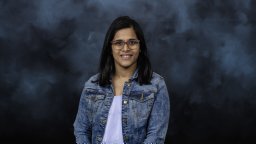
Talk Title: Zero-Noise Extrapolation Resolves Two-Spin Entanglement at Quantum Criticality
Quantum phase transitions generate strongly entangled states, and mapping these correlations on quantum hardware provides a stringent benchmark for many-body quantum simulation. The positive partial transpose criterion, combined with quantum overlapping tomography, offers a scalable witness of pairwise entanglement from two-spin reduced density matrices, including for noisy mixed states. But on present-day processors, measurement and gate errors bias the reconstructed correlations, and obscure entanglement. Therefore, we combine matrix-free readout correction with zero-noise extrapolation (ZNE) to mitigate measurement and gate errors in transverse-field Ising and XXZ states prepared with up to 20 qubits on an IBM processor. Extrapolating the relevant correlators recovers near-critical energies with 99.53% and 99.05% accuracy relative to matrix-product-state benchmarks for the Ising and XXZ models, respectively. The mitigated results recover nearest-neighbor entanglement in the Ising model and nearest- and next-nearest-neighbor entanglement in the XXZ model near criticality, demonstrating reliable probing of quantum correlations at quantum phase transition on noisy hardware.
Paul Kairys
Oak Ridge National Laboratory (ORNL)
Bio
Paul Kairys is an Alvin M. Weinberg Distinguished Staff Fellow at ORNL, focusing on quantum computational science with applications in neutron scattering and condensed matter physics. Paul received his B.Sc. in Chemical Engineering from the University of South Florida and a Ph.D. from the University of Tennessee at Knoxville, and was a postdoc at Argonne National Laboratory before joining ORNL in 2024.
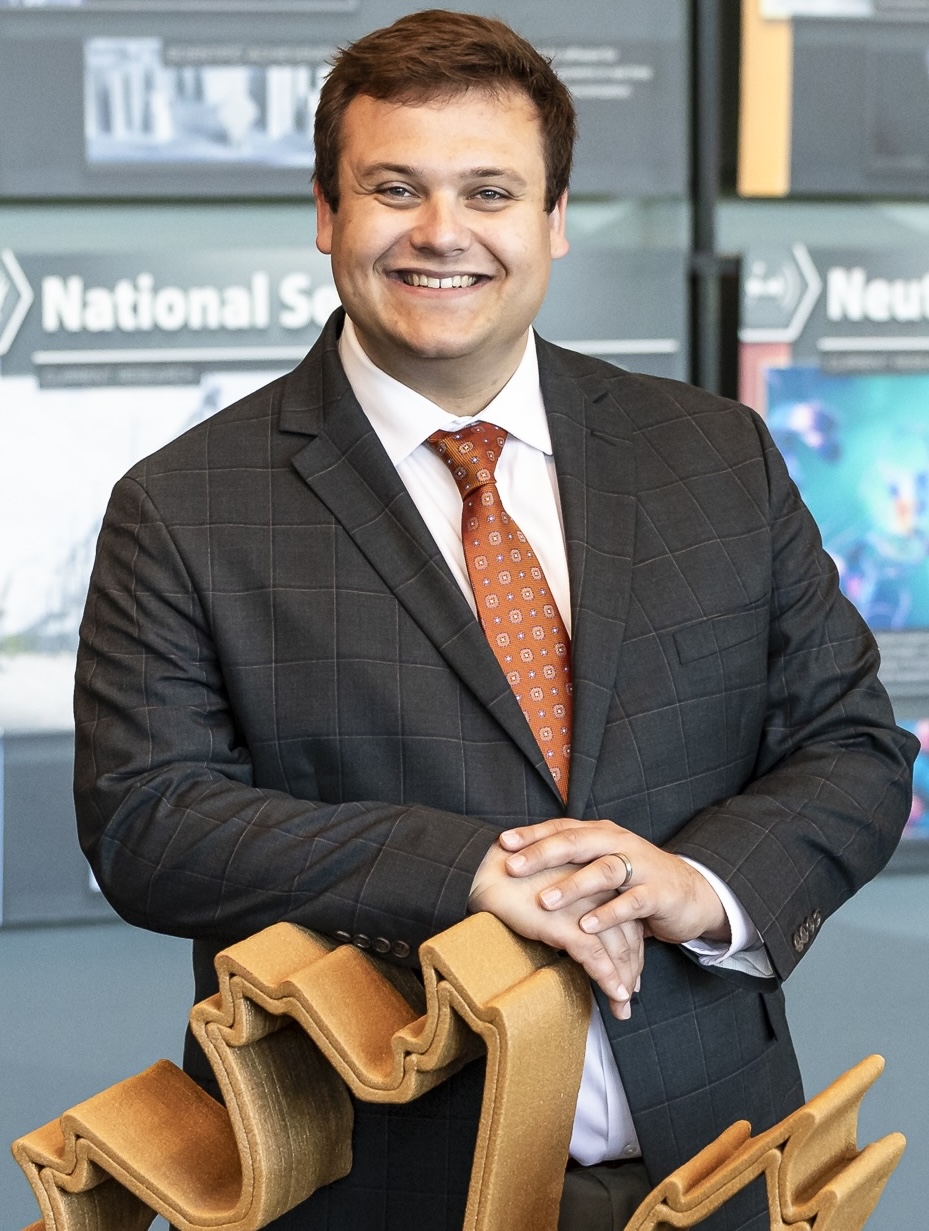
Talk Title: Emergence of Synthetic Twist Defects in the Surface Code Under Local Perturbation
Topologically ordered quantum states with Abelian excitations can host defects that obey effective non-Abelian statistics, in principle allowing for quantum information processing via defect braiding. These extrinsic defects (or twists) are typically studied as static features of the lattice. However, an alternative proposal considers how an underlying topologically ordered quantum substrate can be locally perturbed to create and manipulate synthetic defects. Understanding the energy spectrum is particularly important in finite size and finitely perturbed systems, which are crucial for experimental realizations. In this work we announce a significant step in this direction by explicitly constructing, simplifying, and numerically studying the spectral properties of synthetic defects in a model system. We conclude by discussing key steps for future work to more clearly and completely study this phenomena and potential applications.
Evangelia Takou
Duke University
Bio
Evangelia received her Ph.D. in Physics from Virginia Tech, where she worked with Prof. Sophia Economou and Prof. Ed Barnes on gate design, quantum networks, and analysis of multipartite entanglement. In 2024, she joined Prof. Ken Brown’s lab at Duke University as a Postdoctoral Associate, and since then she has been researching quantum error correction.
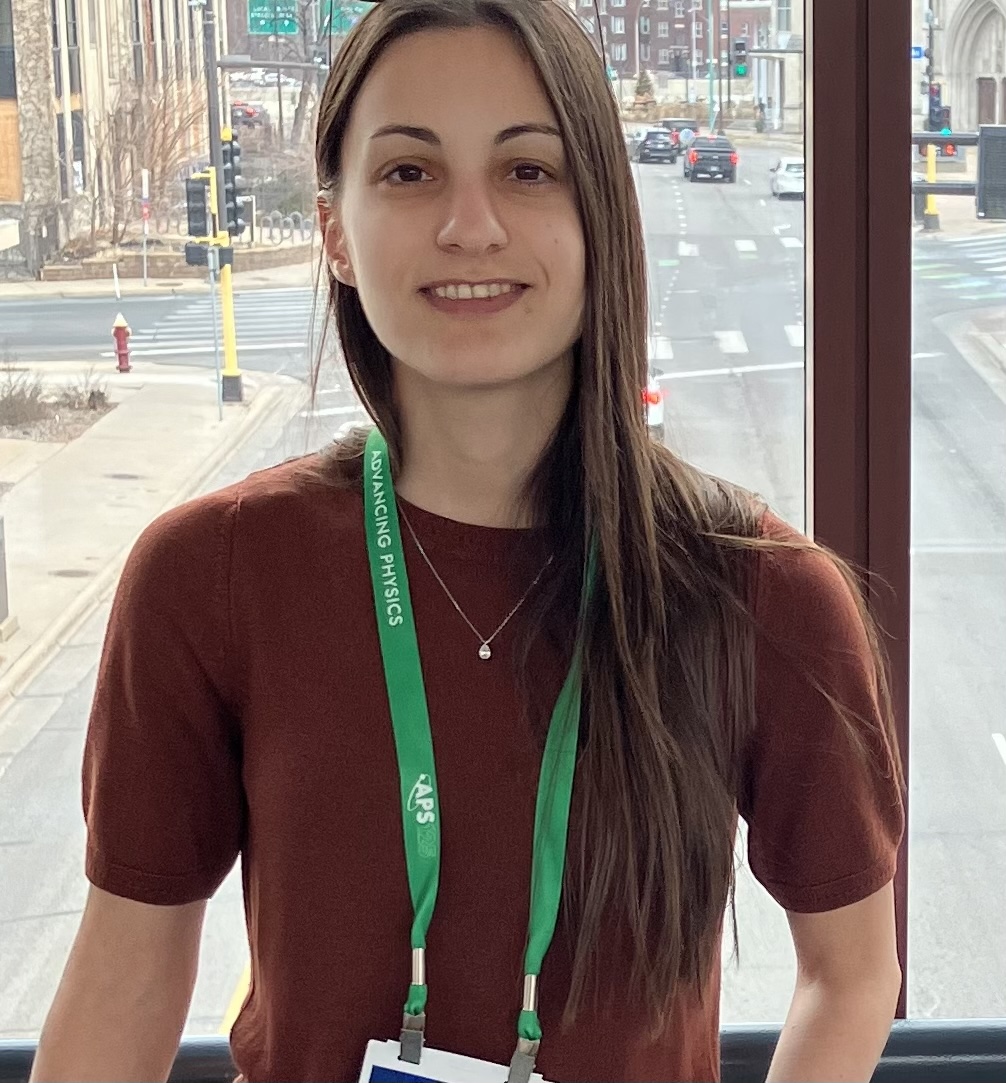
Talk Title: Suppressing logical errors with syndrome-determined detector error models
Precise knowledge of the noise of quantum devices enables the design of less resource-intensive quantum error correcting (QEC) codes and boosts the logical error suppression via noise-aware decoding. Typical characterization methods such as tomography are limited to small systems due to the prohibitive computational and experimental overhead. In this talk, I will describe an efficient top-down approach for noise estimation, which uses only the syndrome history of QEC experiments. This method can learn stochastic and coherent noise, as well as capture noise drifts. I will show how one can build accurate noise models to benefit decoders through simulations of memory QEC experiments. Lastly, I will talk about benchmarks of the developed method on Google’s and IBM’s devices.
Hunter Nelson
Virginia Tech Center for Quantum Information
Science and Engineering
Bio
Hunter Nelson is a Ph.D. candidate in physics at Virginia Tech, working in quantum information science with Edwin Barnes and Sophia Economou. His research focuses on quantum error correction and quantum control, emphasizing the use of algebraic and geometric structure to simplify the design of quantum operations.
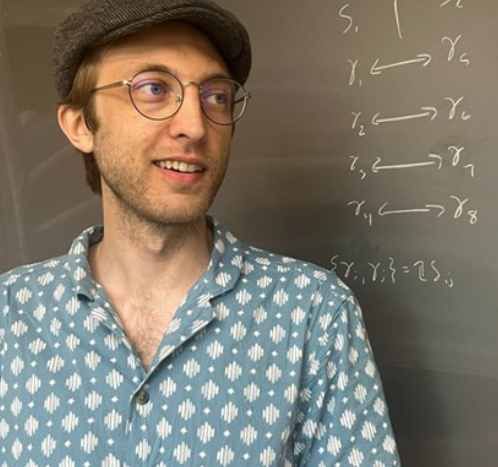
Talk Title: From Syndromes to Computation: A General Framework for Native Logical Operations in Quantum Error-Correcting Codes
Fault-tolerant quantum computation requires error-correcting codes that not only protect quantum information but also support useful logical operations with practical physical realizations. Existing gate-design methods often rely on transversality, CSS structure, code automorphisms, or additional geometric and homological structure, and systematic constructions become substantially more difficult beyond the Clifford group. Here we develop a general framework in which the stabilizer syndromes of commuting Pauli rotations directly organize logical-gate design. We derive an exact codespace-preservation condition valid at arbitrary rotation angles, providing a common stabilizer- level description for CSS and non-CSS codes and for both Clifford and non-Clifford operations. A particularly useful equal-syndrome specialization reduces Clifford gate design to stabilizer factorization, yields a general fragment-weight bound of $\lceild/2\rceil$ for distance-$d$ codes, and systematically extends to logical rotations higher in the Clifford hierarchy. Applied to bivariate-bicycle and non-CSS Mirror qLDPC codes, the framework uncovers large families of Clifford gates together with native controlled-phase and $\pi/8$ $T$-type operations. We also develop analytic constructions using Clifford algebra bases, which turn the syndrome constraints into explicit algebraic relations and produce addressed CNOT, SWAP, controlled, and CCZ-type gates on recursive hypercube codes. An independent construction on middle quantum Reed–Muller codes yields disjoint $C^rZ$ layers that saturate the equal-syndrome weight bound. These results establish stabilizer syndromes as a constructive link between the stabilizer structure of a quantum code and the logical computations it can natively
support.
Hrushikesh Pramod Patil
NC State University
Bio
Hrushikesh Pramod Patil is a Postdoctoral Research Scholar at NC State, where he works in Dr. Sabre Kais’ quantum information science group. He received his Ph.D. from NC State under the supervision of Dr. Huiyang Zhou. His research focuses on fault-tolerant quantum computing, especially simulating and benchmarking quantum error correction and magic-state preparation protocols. It also extends to quantum error mitigation, quantum machine learning, and non-equilibrium quantum dynamics.
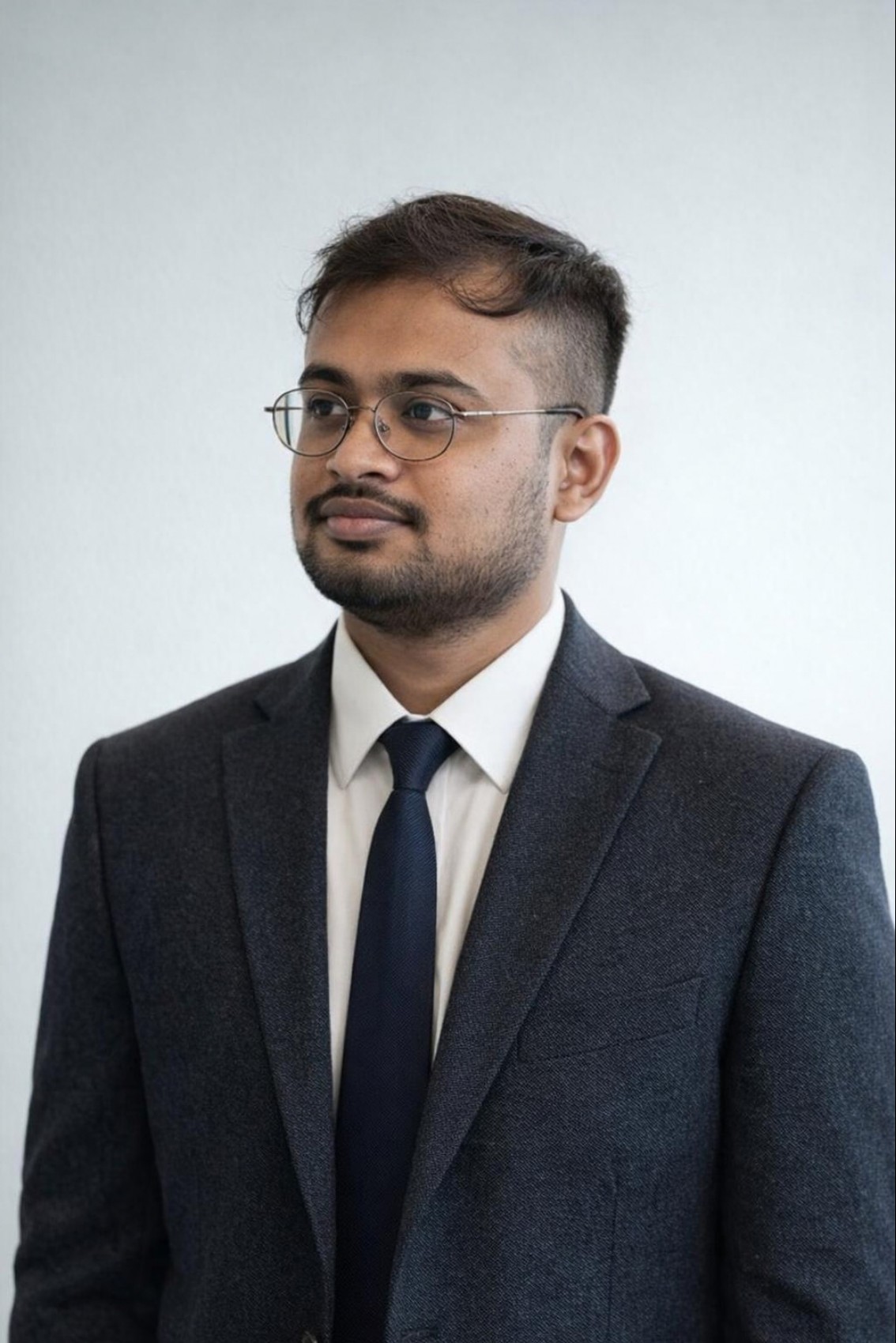
Talk Title: Magic state factories via transversal non-clifford gates
Preparing high-fidelity magic states is a major resource bottleneck in fault-tolerant quantum computing. Magic-state cultivation (MSC) has recently emerged as a low-overhead alternative to distillation, producing T states at roughly the cost of a lattice-surgery CNOT. It has since been extended to surface-code variants, paired with lattice-surgery escape, and demonstrated experimentally on a superconducting processor. Yet most MSC studies rely on Clifford-simulable S-state proxies, and we find that the gap between T- and S-state infidelity widens as physical noise decreases. In this talk, I will present an alternative route that uses code switching with a transversal T gate on the doubled color code. We perform end-to-end simulations under circuit-level noise that includes idling, introduce a lattice-surgery protocol that escapes directly from the doubled color code to a rotated surface code, and extend the protocol to distance 5. Finally, I will discuss hybrid protocols that combine MSC-style phase-kickback checks with transversal non-Clifford gates, and I will explain where each approach is best suited, particularly on all-to-all-connected platforms such as trapped ions and neutral atoms.
Poster Session
Presenters:
Elin Ranjan Das: Molecular Vibrational Error Code
More details TBA.
Sangram Deshpande: Coming Soon
More details TBA.
Jishnu Mahmud: Moment-Structured Block Encodings of Periodic Finite-Difference Operators
We show how to design block-encoding circuits and analyze their optimality in terms of encoding subnormalization for finite-difference stencils.
Mark Prusten: Coming Soon
More details TBA.
Jannes Stubbemann: Develop and Share Quantum Error Correction Codes on Aqora
More details TBA.
Bobby Zhang: The Clifford Hierarchy Plane
We study semi-Clifford and generalized semi-Clifford structures in the Clifford hierarchy as a function of hierarchy level $k$ and qubit number $n$. We give a complete picture on when a cell $(k,n)$ is semi-Clifford and an almost complete picture on generalized semi-Clifford property. We also propose a structure beyond generalized semi-Clifford.
Sunday, Oct. 11
Eyal Bairey and Omri Golan
Qedma Quantum Computing
Bio
Eyal Bairey is VP of Research at Qedma Quantum Computing. His work focuses on improving the reliability and performance of quantum computers through advanced error reduction methods and noise-resilient algorithms. He earned his Ph.D. in Physics from the Technion.

Bio
Omri Golan is Head of Error Correction at Qedma Quantum Computing. His work focuses on quantum error correction and on methods that combine error correction with error mitigation to improve logical quantum computations.

Talk Title: Quantum Error Suppression and Mitigation: From Fundamentals to Applications and Logical Error Mitigation
Quantum error suppression and mitigation are crucial for enabling accurate quantum computations before full fault tolerance and remain valuable as error correction matures. In this tutorial, we will begin with accessible intuition for how errors affect quantum circuits and introduce the main ideas behind error suppression and characterization-based mitigation. We will then examine state-of-the-art methods and show how they enable applications across quantum simulation, quantum chemistry, and other domains, focusing on a recent high-accuracy simulation of prethermal Floquet dynamics in a regime beyond the reach of leading classical simulations. Finally, we will discuss the interplay between error mitigation and error correction, focusing on how syndrome information gathered during error-corrected computations can improve the efficiency of logical error mitigation. We will highlight recent work revealing how, in a sense, error mitigation is built into error-corrected circuits.
Dima Farfurnik
NC State University
Bio
Dr. Demitry (Dima) Farfurnik is an Assistant Professor of Electrical and Computer Engineering and Physics at North Carolina State University. Farfurnik completed his Ph.D. in Physics at the Hebrew University of Jerusalem. Prior to joining NC State, he was a Postdoctoral Associate at the University of Maryland, College Park. His research focuses on the study of fundamental science and the development of novel quantum technologies utilizing optically active spin systems in the solid state, such as quantum dots and color centers.

Talk Title: Characterizing and Suppressing Physical Error Sources in Quantum Systems Using Coherent Control
In this talk, I will discuss the physical mechanisms that give rise to errors in quantum systems, including decoherence and relaxation, and present methods to characterize and mitigate them. Specifically, I will introduce coherent control techniques that can identify and quantify noise sources in qubits, as well as optimized dynamical decoupling pulse sequences capable of suppressing these noise sources while remaining robust against experimental imperfections.
Eugene Dumitrescu
Oak Ridge National Laboratory
Bio
Eugene is a Senior Research scientist at ORNL where his research lies at the intersection of quantum physics and information theory. He is interested in understanding quantum many-body systems, their potential technological applications, as well as their real-world complexity. This includes, for example, topologically ordered condensed-matter systems and entangled quantum matter with applications to computation and ultra-precise metrology. To quantitatively understand these varied and complex phenomena, he employs a combination of analytic methods and multilinear algebraic computational methods.
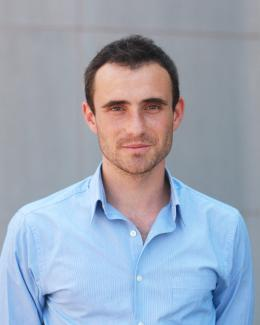
Talk Title: Dealing with Open Quantum Systems: New Topological Codes and Dissipative Simulations at Scale.
In addition to complex quantum phenomena described by Schrodinger’s wave equation, modern quantum systems inevitably couple and interact with both classical and quantum environments. This leads to rich, novel quantum physics. This talk will describe a new, infinite family of quantum error correcting codes and multilinear methods to simulate open quantum systems at scale. Our error correction portion will focus on the benefits of confined anyons, with respect to decoder complexity, in error correcting codes. The open systems simulator will focus on applications to predicting future quantum device’s algorithmic performance and dissipative steady states.
Michael Ruhmel
NC State University
Bio
Michael Ruhmel is a Ph.D. student in the Department of Electrical and Computer Engineering at NC State University. He is advised by Dr. Demitry Farfurnik, where his research focuses on experimentally realizing deterministic entanglement between photons using photonic cavities coupled to semiconductor spin qubits. He is also interested in developing protocols and experimental architectures for generating specific photonic entangled states, including cluster states, tree states, and more general graph states.
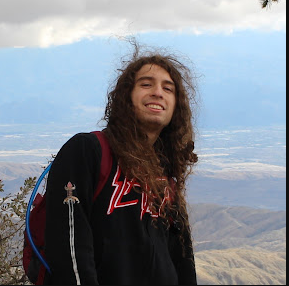
Talk Title: Generating Cluster States Toward Photonic Quantum Error Correction
Using photons for fault tolerant quantum computation is challenging due to their extremely weak interactions with each other. One approach for overcoming this limitation is measurement based quantum computation, which utilizes highly entangled states, known as cluster states, to perform computation. However, the generation of large cluster states remains difficult due to the complex entanglement structure of these states, as well as experimental losses. In this talk, I will present a deterministic method for generating cluster states by coupling a single matter qubit to a photonic cavity, in which cavity quantum electrodynamics mediates the entanglement between a group of photons. I will describe our approach of utilizing multiple matter qubits to parallelize cluster-state generation and emphasize the advantages of this approach compared to the use of a single matter qubit. Most notably, for certain subgroups of two- and three-dimensional cluster states, our approach offers exponential speedup in the successful generation of these states due to the added parallelization and reduction of photon losses. These improvements may enable the generation of previously infeasible cluster states, paving the way toward the use of multiple logical qubits and deep circuits for fault-tolerant measurement-based quantum computation.
Mohsen Ghodrati
NC State University
Bio
Mohsen Ghodrati is a Ph.D. student in Electrical Engineering at NC State, advised by Prof. Dror Baron. His research focuses on quantum information processing, quantum error mitigation, and statistical methods for extracting reliable information from finite quantum measurements. His recent work develops sample-level error-mitigation methods for recovering useful bitstrings from noisy quantum executions.
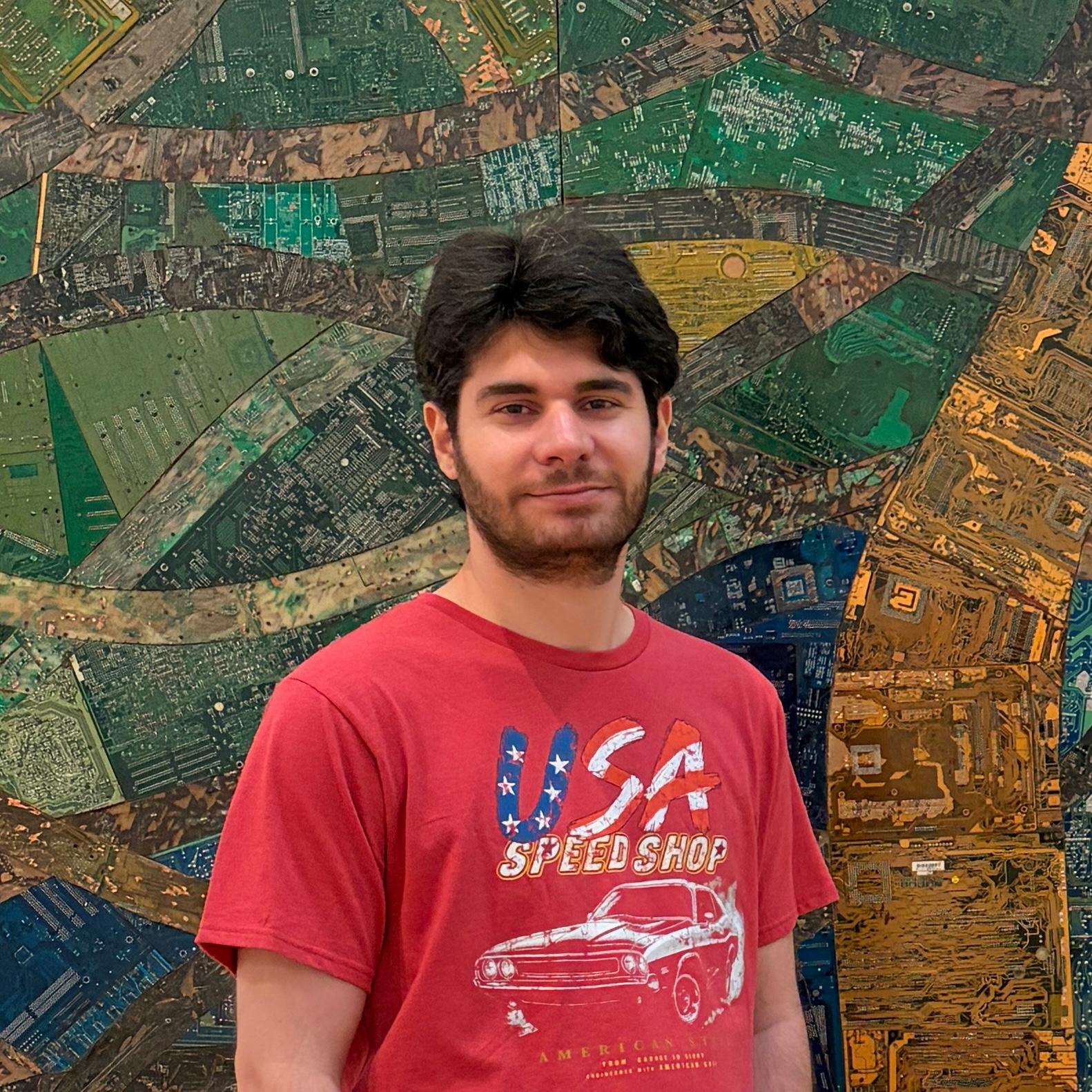
Talk Title: Reliable Sample-Level Quantum Error Mitigation via Dominance-Aware Clustering
Many quantum algorithms ultimately require useful bitstrings–not only accurate expectation values–from a finite set of noisy measurements. This talk presents dominance-aware (DA) clustering, a sample-level quantum error mitigation framework for discovering and refining high-probability solution regions directly from measured bitstrings. We discuss its finite-sample recovery guarantees, practical variants, and experiments on noisy QAOA instances.
John Stack
NC State University
Bio
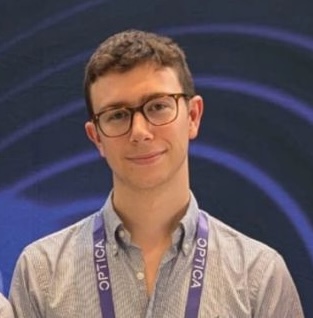
John Stack is a Computer Science Ph.D. student supervised by Prof. Frank Mueller at NC State. His research focuses on quantum computer architecture and error correction, especially in large-scale systems.
Talk Title: From Distributed Fault-Tolerant Operations to Heterogeneous Quantum Architectures
Large-scale fault-tolerant quantum computing is likely to require increasing specialization and distribution. Storage, computation, and communication place different demands on hardware, connectivity, and quantum error correction, creating significant opportunities for architectural and algorithmic co-design. In this talk, I will discuss our work exploring these opportunities across multiple layers of the quantum computing stack.
First, I will present our circuit-level study of transversal fault-tolerant distributed operations. We show how transversal operations between qLDPC code blocks can enable efficient distributed computation, and find that non-local CNOTs can achieve up to an order of magnitude lower logical error rates than logical teleportation under matched conditions. I will also introduce the Transversal Multiple Code Block Simulator (TMCBS), our scalable framework for studying distributed operations across different codes and noise models.
I will then present a heterogeneous distributed architecture for fault-tolerant quantum simulation. By separating an extensible storage system from a centralized magic core and co-designing the architecture around the structure of fermionic simulation workloads, we efficiently execute highly non-local Pauli-string operations. I will compare this design with homogeneous distributed architectures and discuss the resulting trade-offs between communication, connectivity, parallelism, and resource cost.
This talk is based on doi.org/10.1038/s41467-026-75693-3 and https://doi.org/10.48550/arXiv.2608.09215.
Raghav Jha
NC State University
Bio
Raghav Jha is a theoretical and quantum computational physicist at NC State. Before NC State, he
was a postdoc at Jefferson Lab and the Perimeter Institute.

Talk Title: Error mitigation and quantum chaos in Sachdev-Ye-Kitaev model on IBM quantum computers
I will present some of our published results related to computation of return probability and quantum chaos in a paradigmatic model of quantum gravity known as the Sachdev-Ye-Kitaev model. We use self-mitigation (an improvement over the CNOT-only mitigation) to obtain results consistent with exact diagonalization for circuit depth of more than 300 CNOT gates. This work is based on https://arxiv.org/abs/2311.17991, published as Phys. Rev. D, 109, 105002 (2024).